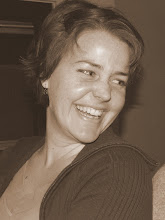
In case anyone is interested, here is the link to my study program. I even managed to get tagged in a photo on the home page.
http://sds.ukzn.ac.za
Its a fantastic program- rigorous and challenging in its demands, beautiful in its diversity and full of opportunity to explore the issues I am passionate about. It's been good for me.
Things I will do today:
-read, read, read
-speak to my research supervisor who will enable me to
-write, write, write
-trade back massages with Anna
-run with Mary
Wednesday, August 20, 2008

Sunday, August 10, 2008
Hluhluwe-Infolozi Game Park


It was fun to hang out of the truck to get a photo with the elephant. He was a stubborn old man who wouldn't move out of the road to let us pass by on our morning game drive. It was incredible to wake at 4 am, while the stars were still glimmering in the sky, to have several moments to commune with nature. Our morning drive departed from base promptly at 6 am with the sun just beginning to come up over the horizon. As we made our way through the park, eyes fixated on the bush waiting for movement and ears attuned to the choir of birds, we saw three of South Africa's big five- elephant, rhino and buffalo, plus giraffes, zebra and lots of other fun things. One of the highlights was the Tuesday morning hike that we went on. We came across a rhino and her cub who gracefully glided through the brush about 50 yards from where we were walking. It was beautiful. I went with Anna's parents and had 3 wonderful days and two nights.
This trip was the final trip for my 'winter' travel. We returned to Durban on Wednesday July 30 only to commence courses on Thursday. After such a free and fantastic time of travel I am finding it a bit difficult to regather all the discipline I know that is within me to focus on coursework again. But it is a good process. I am so grateful for all these experiences. I have been refreshed and rejuvenated in ways I didn't know was possible. I know that the energy and peace gained over the last six weeks will better enable me to find that delicate balance between studies/the things that are required of me and the things that bring life.
Friday, July 25, 2008
a detailed entry: 4 July 2008


Fourth of July I stumbled out of bed upon Anna’s insistence that I quickly go outside. I did not know what could be so important as to take me from my sweet dreams that were encouraged by the soothing sounds of waves crashing on the shore just meters from my bed. We were staying at Beach Haven Backpackers in Wilderness along the gorgeous
The entire day was spent oohing and aawing this beautiful land. From Wilderness we continued our drive up through the Klein
travels
19 June- 11 July Anna and I traveled South Africa's  gorgeous Garden Route. There were some stunning views, beautiful people and lots of good times. We stopped at every farm stall to admire the homemade jams, mustards and other crafts, had a cup of tea in many of the small towns and just enjoyed life. We took a combination of buses, rental cars and returned to Durbs by plane. It was fantastic. We travelled the N2 along the eastern coast along the route until we got to a town called George, where we headed north to the Swartburg pass, the quaint town of Prince Albert and then along Route 62 into Cape Town.
Here are a few pictures of our journey.

Anna and I on the Salt River Trail in Nature's Valley. A 5 hour hike through the fields, forest and around the lagoon. Stunning.

A quick stop at the Kango Caves for a tour. www.cangocaves.co.za/

This is the Swatberg pass. One of my favorite days of the trip was taking this windy dirt pass up and over into Prince Albert. The red rock formation filled me with awe.

Top of the Pass :)

The westerly southernmost point on the continent. We spent the day hiking around the Cape of Good Hope imagining what it would have been like to have been on a passenger ship coming around the cape. We also stopped at Boulder Beach to admire the penguins and took the tour of Robben Island and Parliamen while in Cape Town.

Then the following week I hopped on a bus with Drew, Tom, Will headed to Maputo, capital of Mozambique for four days. It was a beautiful drive through South Africa, Swaziland and into Maputo. We went to the museums, ate amazing prawns on a deck overlooking the ocean and picked up some amazing sea shells.
 gorgeous Garden Route. There were some stunning views, beautiful people and lots of good times. We stopped at every farm stall to admire the homemade jams, mustards and other crafts, had a cup of tea in many of the small towns and just enjoyed life. We took a combination of buses, rental cars and returned to Durbs by plane. It was fantastic. We travelled the N2 along the eastern coast along the route until we got to a town called George, where we headed north to the Swartburg pass, the quaint town of Prince Albert and then along Route 62 into Cape Town.
Here are a few pictures of our journey.

Anna and I on the Salt River Trail in Nature's Valley. A 5 hour hike through the fields, forest and around the lagoon. Stunning.

A quick stop at the Kango Caves for a tour. www.cangocaves.co.za/

This is the Swatberg pass. One of my favorite days of the trip was taking this windy dirt pass up and over into Prince Albert. The red rock formation filled me with awe.

Top of the Pass :)

The westerly southernmost point on the continent. We spent the day hiking around the Cape of Good Hope imagining what it would have been like to have been on a passenger ship coming around the cape. We also stopped at Boulder Beach to admire the penguins and took the tour of Robben Island and Parliamen while in Cape Town.

Then the following week I hopped on a bus with Drew, Tom, Will headed to Maputo, capital of Mozambique for four days. It was a beautiful drive through South Africa, Swaziland and into Maputo. We went to the museums, ate amazing prawns on a deck overlooking the ocean and picked up some amazing sea shells.
Wednesday, July 2, 2008
now for some photos

Alicia, Anna and I at the Sugar Shack backpackers lodge in East London. It was 50 meters from the waves crashing on the shore- absolutely amazing. We went on a nice morning jog the first day we were here.

This is the 4 month old lion knawing on my arm. check out the size of his paw...

Love is in the air with our friend Jenny. She was very friendly and photogenic. Plus she had a blue tongue.
 South African's are serious about their BBQ's (aka Braii). check out the amount and variety of meat on this grill! This particular shot is from a Braii after a morning of lawn bowling. Needless to say, I was on the losing team...
Tuesday, July 1, 2008
seeing
traveling is not just a matter of going to new places, but experiencing landscapes with new eyes.
My friend Tas sent Anna and I this message as we departed for our travel along the garden route. from Durban to Cape Town. We will be traveling for three weeks. We set out on June 19th (Happy Birthay Mel!) on a 13 hour bus ride from Durban to East London. The weekend here was fantastic! Hospitality was in abundance. I was truly inspired by the Rotarians who hosted us and the work that was taking place in the community. It was a beautiful experience. The weekend included everything from Lawn Bowling, to braiing (BBQ), to holding 4 month old white lions (let me tell you at 4 months, they're already amazingly big and strong!).
After a quick stop over in Grahamstown with our friend Alicia, Ann and I hired a car to drive 300k to Nature's Valley where we spent four nights. The stars felt like they were 10 feet away - stunning! The trail we hiked on Thursday led us through the fields and forrest, along the cliffs and down into the lagoon. This holiday has been a gift. It is here in this place that I was really abl to relax and live the fullest I have ever lived in the present moment. and it was beautifully peaceful.
We are currently back at Grahamstown enjoying the International Arts Festival. http://www.nationalartsfestival.co.za/ Its a small quaint town that is positioned in the middle of a valley. The students from the university are what give this place life. And for 2 weeks out of the year, about 70,000 people embark on it to enjoy music, dancing, poetry and some really good food. Our friend Samantha had a captivating performance as part of the Witts Choir last night. The harmony gracefully filled the chapel we were in and gently embraced all us who were present. There are three other scholars we have met up with here. It is good to be amongst friends as I explore more fully the vastness of the country.
My friend Tas sent Anna and I this message as we departed for our travel along the garden route. from Durban to Cape Town. We will be traveling for three weeks. We set out on June 19th (Happy Birthay Mel!) on a 13 hour bus ride from Durban to East London. The weekend here was fantastic! Hospitality was in abundance. I was truly inspired by the Rotarians who hosted us and the work that was taking place in the community. It was a beautiful experience. The weekend included everything from Lawn Bowling, to braiing (BBQ), to holding 4 month old white lions (let me tell you at 4 months, they're already amazingly big and strong!).
After a quick stop over in Grahamstown with our friend Alicia, Ann and I hired a car to drive 300k to Nature's Valley where we spent four nights. The stars felt like they were 10 feet away - stunning! The trail we hiked on Thursday led us through the fields and forrest, along the cliffs and down into the lagoon. This holiday has been a gift. It is here in this place that I was really abl to relax and live the fullest I have ever lived in the present moment. and it was beautifully peaceful.
We are currently back at Grahamstown enjoying the International Arts Festival. http://www.nationalartsfestival.co.za/ Its a small quaint town that is positioned in the middle of a valley. The students from the university are what give this place life. And for 2 weeks out of the year, about 70,000 people embark on it to enjoy music, dancing, poetry and some really good food. Our friend Samantha had a captivating performance as part of the Witts Choir last night. The harmony gracefully filled the chapel we were in and gently embraced all us who were present. There are three other scholars we have met up with here. It is good to be amongst friends as I explore more fully the vastness of the country.
Wednesday, June 4, 2008
an invitation
There is a lot happening in the world and in this country. most times my deepest sigh is, oh life! (translated: Lord have mercy) I recently went to a seminar sponsored by the university on "xenophobia in South Africa, why now?" but the question really is, 'why at all?' yet the news reports tell of violence in every corner of the world. Sitting in the lush gardens on the hill of academia, there is so many things I/ we wrestle with. What is our response? How do we make policy effective and relevant? What is development anyway? In all this I recently returned to the first paper I wrote here. I would like to post it here to invite you into my life and some of the things that I am learning and the questions I am wrestling with. Let me know what you think.
Think Piece 1
Comparative Development Problems and Policies
Backward. To use this as both an identifying and descriptor term is problematic. It provides all things necessary for successful self-fulfilling prophesy, which in this case results in nothing positive. This term, in addition to other pejorative terms such as the third world, implies an inherent disability, disadvantage, or inability to get it right. It implies that which is completely different and perhaps even unsalvageable. It is inherently ethnocentric. When determining a developmental theory to put into practice, it is a wonder that historically there was any attempt to extract anything good out of these ‘backward’ countries. How can one begin on this platform and realistically expect any good or proper outcome?
In the post WWII era Paul Rosenstein-Rodan wrote on the developmental theory for backward countries and the necessary conditions for growth therein. As one of the earliest contributors, Rosenstein-Rodan had much influence on the theorists who followed who would try to explain backwardness and solutions for escaping this condition. Or perhaps it is more accurate to state that he simply recorded most accurately the ethnocentric sentiments of the developed world at the time, bringing to light the negative feelings and so-called inherent inabilities of the backward countries. This notion might be affirmed as the majority in the first world understood that “through economic dominance and political control, the industrial countries actively tried to graft their own ‘modern’ and development-promoting cultures on to the backward societies.” Therefore, if the ‘forward’ and correct thinking countries projected policies and lifestyles onto the ‘backward’ countries, perhaps they would become like them or more appropriately, turn from their ‘backward’ ways to ‘the forward’ way.
What remains puzzling to me is why in 1997 when John Martinussen’s book Society, States and Market was published, or even now, 11 years later in 2008 we continue to focus on the ‘backwardness’ of countries in the developing world and thus continues to encourage the self-fulfilling prophecy of poor performance and growth. It is evident now that the self-image and policies implemented in the ‘backward’ countries reflect to a large degree the image and policies that has been given to them throughout the history of development. In this I question our ability to be critical thinkers if we continue to let the labels of history guide our conversations, academic works and policies. Are we struggling enough with how to label people and countries? Do we realize the affect these labels have on self-image and self-understanding of ourselves individually, nationally and corporally? Why have we not come to a place of respect and acceptance of others that would enable us to overcome our self-centeredness or ethnocentrism?
Perhaps out of the reading selections Gunnar Myrdal can help us most here as he “strongly believed that a certain degree of economic and social equality and equity was a precondition for sustained growth. He rejected the widespread conception that there is a contradiction between the objectives of economic growth and those of promoting social equality.” Social equity must be found in all spheres of society, including the way in which we view and label ourselves and the other. I agree alongside Myrdal in his rejection of the notion that economic growth and social equality cannot go hand in hand. This is especially the case if the goal is sustainable growth and development. In order to achieve this equity must be a factor at all levels of participation for all people. And this means that we must use new terms and names to identify people and people groups that invite full participation.
Unfortunately promotion of social equality has often been bypassed in the name of high sustained growth or toward W.W. Rostrow’s “époque of high mass consumption.” Theories have been created to address the problems of underdevelopment that “analyze ‘barriers to modernization’ and ‘resistance to change.” Yet what this really translates to is theories addressing the ‘backward’ countries’ resistance to assimilation to the dominant, ‘forward’ countries and the sustaining of growth, which by no means equates sustainable growth.
As much as one might have hoped that solutions would be found in the modernization paradigm, Magnus Blomstrom and Bjorn Hettne write, “the disciplines that now began to participate in the theoretical discussion repeated the early mistakes of development economics…it was difficult to break the ethnocentric perspective and to change culturally determined premisses.” I argue that we never arrived here. But we must continue to make progress in this direction. In order to do so, it has to be a collective process. For all of us to move forward, we must critically examine the language that is used and critique the language of our common history. Only then will growth and participation at all levels for all people be sustainable.
Think Piece 1
Comparative Development Problems and Policies
Backward. To use this as both an identifying and descriptor term is problematic. It provides all things necessary for successful self-fulfilling prophesy, which in this case results in nothing positive. This term, in addition to other pejorative terms such as the third world, implies an inherent disability, disadvantage, or inability to get it right. It implies that which is completely different and perhaps even unsalvageable. It is inherently ethnocentric. When determining a developmental theory to put into practice, it is a wonder that historically there was any attempt to extract anything good out of these ‘backward’ countries. How can one begin on this platform and realistically expect any good or proper outcome?
In the post WWII era Paul Rosenstein-Rodan wrote on the developmental theory for backward countries and the necessary conditions for growth therein. As one of the earliest contributors, Rosenstein-Rodan had much influence on the theorists who followed who would try to explain backwardness and solutions for escaping this condition. Or perhaps it is more accurate to state that he simply recorded most accurately the ethnocentric sentiments of the developed world at the time, bringing to light the negative feelings and so-called inherent inabilities of the backward countries. This notion might be affirmed as the majority in the first world understood that “through economic dominance and political control, the industrial countries actively tried to graft their own ‘modern’ and development-promoting cultures on to the backward societies.” Therefore, if the ‘forward’ and correct thinking countries projected policies and lifestyles onto the ‘backward’ countries, perhaps they would become like them or more appropriately, turn from their ‘backward’ ways to ‘the forward’ way.
What remains puzzling to me is why in 1997 when John Martinussen’s book Society, States and Market was published, or even now, 11 years later in 2008 we continue to focus on the ‘backwardness’ of countries in the developing world and thus continues to encourage the self-fulfilling prophecy of poor performance and growth. It is evident now that the self-image and policies implemented in the ‘backward’ countries reflect to a large degree the image and policies that has been given to them throughout the history of development. In this I question our ability to be critical thinkers if we continue to let the labels of history guide our conversations, academic works and policies. Are we struggling enough with how to label people and countries? Do we realize the affect these labels have on self-image and self-understanding of ourselves individually, nationally and corporally? Why have we not come to a place of respect and acceptance of others that would enable us to overcome our self-centeredness or ethnocentrism?
Perhaps out of the reading selections Gunnar Myrdal can help us most here as he “strongly believed that a certain degree of economic and social equality and equity was a precondition for sustained growth. He rejected the widespread conception that there is a contradiction between the objectives of economic growth and those of promoting social equality.” Social equity must be found in all spheres of society, including the way in which we view and label ourselves and the other. I agree alongside Myrdal in his rejection of the notion that economic growth and social equality cannot go hand in hand. This is especially the case if the goal is sustainable growth and development. In order to achieve this equity must be a factor at all levels of participation for all people. And this means that we must use new terms and names to identify people and people groups that invite full participation.
Unfortunately promotion of social equality has often been bypassed in the name of high sustained growth or toward W.W. Rostrow’s “époque of high mass consumption.” Theories have been created to address the problems of underdevelopment that “analyze ‘barriers to modernization’ and ‘resistance to change.” Yet what this really translates to is theories addressing the ‘backward’ countries’ resistance to assimilation to the dominant, ‘forward’ countries and the sustaining of growth, which by no means equates sustainable growth.
As much as one might have hoped that solutions would be found in the modernization paradigm, Magnus Blomstrom and Bjorn Hettne write, “the disciplines that now began to participate in the theoretical discussion repeated the early mistakes of development economics…it was difficult to break the ethnocentric perspective and to change culturally determined premisses.” I argue that we never arrived here. But we must continue to make progress in this direction. In order to do so, it has to be a collective process. For all of us to move forward, we must critically examine the language that is used and critique the language of our common history. Only then will growth and participation at all levels for all people be sustainable.
Subscribe to:
Posts (Atom)